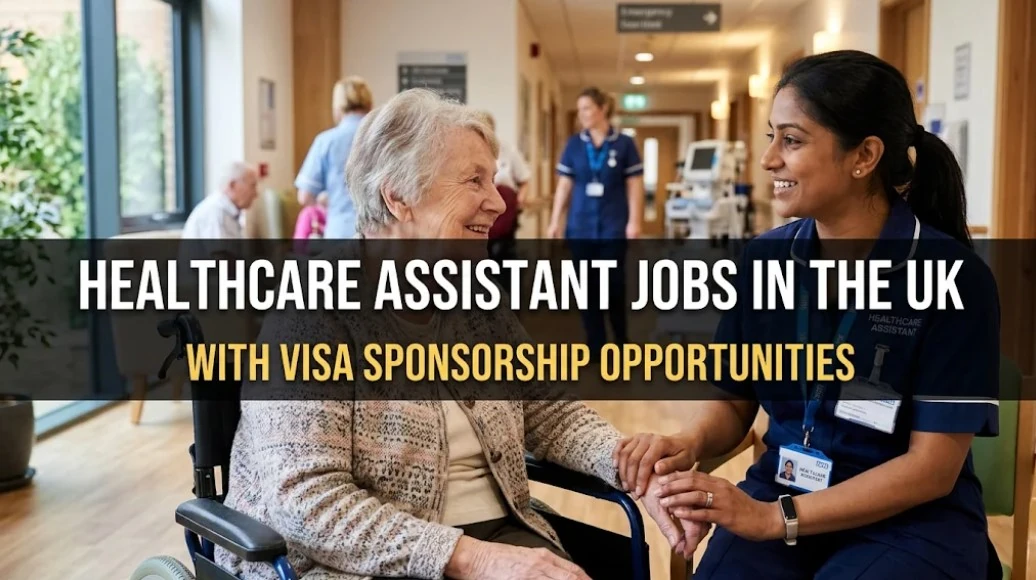
Healthcare Assistant Jobs in the UK With Visa Sponsorship Opportunities are an attractive option for international applicants who want to build a rewarding career in the British healthcare sector.
With opportunities across hospitals, nursing homes, residential care facilities and community healthcare services, healthcare assistants play an important role in supporting patients, nurses and other medical professionals.
For qualified and compassionate individuals looking to work abroad, these positions can offer valuable professional experience, competitive salaries and opportunities for long-term career development.
Healthcare Assistant Jobs in the UK With Visa Sponsorship Opportunities also attract international job seekers because the UK has an established healthcare system that depends on a wide range of healthcare support professionals.
Healthcare assistants help patients with everyday activities, monitor their wellbeing, maintain comfortable care environments and provide essential assistance to clinical teams.
However, securing employment with visa sponsorship requires understanding the available job categories, immigration requirements, salary expectations and the employers legally permitted to sponsor international workers.
If you are considering moving to the UK to work in healthcare, this guide explains the opportunities available, the different healthcare assistant roles, potential earnings, eligibility requirements and practical steps for finding legitimate sponsored employment.
Understanding Healthcare Assistant Jobs in the UK
A healthcare assistant, sometimes called a healthcare support worker or nursing auxiliary, is a professional who helps patients receive appropriate care and support. These workers operate under the supervision of registered nurses, doctors and other qualified healthcare professionals.
Their responsibilities depend on the healthcare environment and the needs of individual patients. In hospitals, healthcare assistants may support patients recovering from surgery, assist with personal hygiene and record basic observations.
In residential care facilities, they may help elderly residents with meals, mobility, dressing and everyday activities.
Healthcare assistants are important because they provide direct support that allows nurses and other medical professionals to concentrate on more specialised clinical responsibilities.
International applicants can explore opportunities in several areas, including:
- NHS hospitals and healthcare facilities.
- Private hospitals and medical centres.
- Residential care homes.
- Nursing homes.
- Mental health support services.
- Community healthcare organisations.
- Rehabilitation and specialist care facilities.
- Home healthcare services.
Not every healthcare assistant vacancy offers visa sponsorship. Applicants must therefore distinguish between employers that recruit internationally and those that only consider candidates who already have permission to work in the UK.
Understanding UK Visa Sponsorship for Healthcare Assistants
Before applying for Healthcare Assistant Jobs in the UK With Visa Sponsorship Opportunities, it is important to understand the UK’s immigration rules.
The Health and Care Worker visa is a route within the Skilled Worker immigration system designed for eligible healthcare professionals and certain other qualifying healthcare occupations.
However, an important distinction applies to healthcare assistants and care workers.
The UK closed new overseas applications for care worker and senior care worker roles under occupation codes 6135 and 6136 from 22 July 2025. Transitional arrangements allow certain eligible workers already in the UK to extend or switch under specified conditions until 22 July 2028.
This means international applicants should not assume that an ordinary care assistant or domiciliary care worker vacancy automatically provides an available overseas sponsorship route.
Some healthcare support occupations, including eligible nursing auxiliary and assistant roles, may still qualify under occupation code 6131, subject to the current immigration rules, salary requirements and employer eligibility.
For this reason, applicants should carefully check the occupation code attached to a vacancy rather than relying entirely on its advertised job title.
Official guidance is available through the UK Health and Care Worker visa website and the UK government guidance for overseas healthcare applicants.
Healthcare Assistant Jobs in the UK and Their Average Annual Salaries
The UK healthcare sector offers several support positions for people interested in patient care. Although these jobs have similar responsibilities, each position has its own working environment, specialisation and salary expectations.
The following figures are indicative gross annual earnings, not guaranteed offers or immigration salary thresholds. Actual pay depends on the employer, experience, working hours, responsibilities and applicable NHS pay arrangements.
-
General Healthcare Assistant
Average annual salary: £25,000–£27,000
General healthcare assistants provide everyday support to patients in hospitals, medical facilities and other healthcare environments. Their responsibilities include helping patients wash, dress, eat and move around safely.
They may also record basic observations, prepare patient areas, change bedding and report concerns about patients to registered nurses. Good communication, patience and the ability to work in a team are important qualities.
This is one of the most recognisable healthcare support occupations. Where the actual duties and employment conditions meet the requirements for occupation code 6131, an eligible position may qualify for sponsorship.
-
Nursing Assistant
Average annual salary: £24,500–£28,000
Nursing assistants work alongside registered nurses to deliver basic patient care. They help with personal hygiene, patient mobility, feeding, comfort and routine monitoring.
They are often involved in maintaining patient records and communicating changes in a patient’s condition to the nursing team.
The position is particularly suitable for people interested in developing a long-term career in nursing or healthcare support. The exact occupation code must be checked because job titles alone do not determine visa eligibility.
-
Ward Healthcare Assistant
Average annual salary: £24,500–£28,000
Ward healthcare assistants support patients admitted to hospital wards. They help maintain a safe and comfortable environment while assisting nurses with everyday patient care.
Typical duties include preparing beds, helping patients move between different areas, assisting with meals, monitoring basic observations and ensuring that patient needs are communicated promptly.
Ward assistants must be organised, attentive and comfortable working shifts. Hospitals may offer opportunities to develop experience in different medical departments.
-
Theatre Support Worker
Average annual salary: £24,500–£29,000
Theatre support workers assist surgical teams before, during and after operations. Their responsibilities can include preparing operating areas, transporting patients, maintaining cleanliness and ensuring that essential equipment is available.
They work closely with nurses, surgeons and other theatre professionals. Strict hygiene procedures, attention to detail and an understanding of patient safety are essential.
This position can be appealing to applicants interested in surgical healthcare environments. Sponsorship depends on the actual duties, occupation classification and applicable immigration rules.
-
Maternity Support Worker
Average annual salary: £24,500–£29,000
Maternity support workers assist midwives and other maternity professionals in caring for expectant mothers and newborn babies.
Their responsibilities may include preparing maternity areas, helping mothers with everyday needs, providing practical support after childbirth and assisting with routine observations under appropriate supervision.
They must demonstrate compassion, professionalism and sensitivity when supporting families during pregnancy, labour and the postnatal period.
Previous experience in healthcare or childcare can be useful, although employer requirements vary.
-
Mental Health Support Worker
Average annual salary: £24,500–£29,000
Mental health support workers help individuals experiencing mental health difficulties by providing practical and emotional support.
They may assist patients with daily routines, encourage participation in therapeutic activities, observe changes in behaviour and communicate concerns to qualified mental health professionals.
Patience, empathy, emotional resilience and good communication skills are particularly important in this position.
Some roles may be classified differently for immigration purposes, so applicants should establish the correct occupation code before relying on a sponsorship offer.
-
Community Healthcare Assistant
Average annual salary: £24,500–£28,000
Community healthcare assistants support patients who receive healthcare outside traditional hospital environments.
They may visit patients at home, assist with personal care, help individuals maintain independence and report changes in their condition to supervising professionals.
The role requires flexibility, time management and the ability to work independently while following established care plans.
Applicants should distinguish eligible healthcare support positions from ordinary home care worker vacancies, as the immigration rules for the latter changed in July 2025.
-
Rehabilitation Support Worker
Average annual salary: £25,000–£29,000
Rehabilitation support workers help patients recover their independence following illness, injury or surgery.
They work alongside physiotherapists, occupational therapists and other healthcare professionals to support rehabilitation programmes.
Responsibilities may include assisting with prescribed exercises, helping patients practise everyday activities, monitoring progress and maintaining a supportive environment.
People with backgrounds in healthcare, physical rehabilitation or patient support may find this position particularly interesting.
-
Palliative Care Assistant
Average annual salary: £24,500–£28,500
Palliative care assistants support people living with serious or life-limiting illnesses. Their work focuses on comfort, dignity and practical assistance.
They may help patients with personal hygiene, eating, movement and everyday activities while offering compassionate support to families.
The role requires emotional maturity, patience and respect for individual preferences. Workers must understand the importance of confidentiality and follow care instructions provided by qualified professionals.
-
Senior Healthcare Assistant
Average annual salary: £27,000–£32,000
Senior healthcare assistants have additional responsibilities compared with entry-level healthcare support workers.
They may help coordinate daily care activities, support less experienced colleagues, maintain accurate documentation and communicate patient needs to registered nurses.
Employers often prefer applicants with previous healthcare experience, strong organisational skills and a good understanding of patient safety.
Senior healthcare assistant positions in qualifying clinical environments may offer opportunities for experienced applicants. However, the job must be classified correctly; a senior healthcare assistant title does not automatically qualify as a senior care worker occupation for immigration purposes.
Salary note: The estimates above are general employment-market illustrations rather than official salary quotations. NHS healthcare assistants are commonly employed on Agenda for Change Bands 2 and 3, while specialist or more senior support positions may have different pay arrangements.
The National Careers Service lists healthcare assistant earnings at approximately £25,000 for starters and £27,000 for experienced workers.
Requirements for Healthcare Assistant Jobs in the UK With Visa Sponsorship Opportunities
Although healthcare assistant positions do not always require a university degree, employers generally expect applicants to demonstrate the necessary skills, personal qualities and practical understanding of patient care.
International applicants should prepare to meet the following common requirements.
Educational Qualifications
Most healthcare assistant vacancies require basic education, including good English and mathematics skills. Some employers accept applicants with secondary school qualifications, while others prefer candidates with additional healthcare or social care training.
Relevant qualifications may include:
- Health and Social Care certificates.
- Healthcare Support Worker qualifications.
- First Aid training.
- Basic Life Support training.
- Patient Care and Safety certificates.
- Relevant vocational healthcare qualifications.
A degree is not normally essential for an entry-level healthcare assistant position. However, additional education can strengthen an application and provide opportunities for professional development.
Previous Healthcare Experience
Experience is valuable because healthcare assistants work directly with people who may be ill, elderly, disabled or recovering from medical procedures.
Applicants with experience in hospitals, nursing homes, rehabilitation facilities, community healthcare or other patient-support environments may have an advantage.
Experience does not always need to come from paid employment. Relevant volunteering, supervised placements and practical training can also demonstrate an understanding of patient care.
English Language Ability
Healthcare assistants must communicate effectively with patients, relatives, nurses and other professionals.
Good English skills help workers understand instructions, maintain accurate records and respond appropriately to patient needs.
Visa applicants must also satisfy the applicable English-language requirements for their immigration route. The accepted evidence and required level should be checked against current government guidance.
Practical Care Skills
Employers commonly look for candidates who can demonstrate:
- Patient handling and mobility assistance.
- Personal hygiene and bathing support.
- Basic patient observation.
- Infection prevention and control.
- Communication and teamwork.
- Confidentiality and safeguarding awareness.
- Accurate record keeping.
- Compassionate patient support.
Some employers provide workplace training after recruitment, particularly for entry-level positions.
Background Checks and References
Healthcare employers must take patient safety seriously. Successful candidates may need to complete criminal record checks, provide employment references and undergo identity and employment verification.
Overseas applicants may also be asked to provide evidence of previous employment and qualifications.
The exact checks depend on the employer, position and applicable regulations.
How to Apply for Healthcare Assistant Jobs in the UK With Visa Sponsorship Opportunities
Applying for healthcare employment abroad requires preparation, patience and attention to detail. International candidates who understand the recruitment process are better positioned to identify suitable vacancies and avoid unnecessary application mistakes.
The following steps provide a practical approach.
Step 1: Prepare a Professional Healthcare CV
Your CV is often the first opportunity to convince an employer that you are suitable for a healthcare assistant position.
A professional healthcare CV should highlight relevant experience, qualifications, practical skills and personal qualities.
Include the following information:
- Full professional contact details.
- Educational qualifications.
- Healthcare training and certificates.
- Previous employment history.
- Patient care experience.
- Relevant practical skills.
- Professional references, where available.
Your CV should be easy to read and tailored to the specific vacancy.
For example, if applying for a nursing assistant position, highlight experience with patient mobility, personal hygiene, basic observations and communication with nursing teams.
Avoid including irrelevant information that makes your application unnecessarily lengthy.
Step 2: Search for Eligible Sponsorship Vacancies
Use established recruitment platforms and official healthcare employer websites to find available positions.
Search using relevant job titles, but do not rely exclusively on the words visa sponsorship.
Check whether the employer holds a valid sponsor licence and whether the specific vacancy can be sponsored under the current immigration rules.
For an overseas applicant, an ordinary care worker vacancy under occupation code 6135 is not currently an available new-entry sponsorship route.
Focus on genuinely eligible healthcare occupations, including qualifying nursing auxiliary and assistant positions where the applicable conditions are satisfied.
Step 3: Submit Your Application
Follow the employer’s application instructions carefully.
Some organisations require an online application form, while others accept CVs and supporting documents through their recruitment systems.
Provide accurate information about your qualifications, employment history and practical experience.
Where requested, explain why you are interested in the position and how your skills can contribute to patient care.
Step 4: Prepare for the Interview
Employers may conduct interviews online or in person.
Healthcare assistant interviews commonly assess communication, patient safety, teamwork, compassion and the ability to respond appropriately to challenging situations.
You may encounter questions such as:
- Why do you want to work as a healthcare assistant?
- How would you support a patient who refuses assistance?
- What would you do if you noticed a sudden change in a patient’s condition?
- How would you maintain patient confidentiality?
- How would you handle a difficult or distressed patient?
- Why is infection prevention important in healthcare?
Prepare practical examples that demonstrate your understanding of professional patient care.
Step 5: Confirm the Sponsorship Arrangements
If you receive a job offer, confirm whether the employer will sponsor you under an eligible occupation code.
Ask for clarification about:
- The four-digit occupation code.
- Annual salary and weekly working hours.
- Whether the employer is an approved sponsor.
- Whether the position satisfies the relevant immigration requirements.
- Whether the employer will assign a Certificate of Sponsorship.
- Any costs the employer will cover.
Never assume that a job offer automatically guarantees a successful visa application.
Step 6: Apply for the Appropriate Visa
Once an eligible employer assigns your Certificate of Sponsorship, you can proceed with the relevant visa application.
The Health and Care Worker visa is a specialised route within the Skilled Worker system.
Depending on your circumstances, you may need to provide:
- A valid passport.
- Your Certificate of Sponsorship reference number.
- Evidence of English language ability.
- Evidence of relevant qualifications, where required.
- Financial maintenance evidence, if applicable.
- Additional documents requested by UK Visas and Immigration.
You must satisfy all relevant immigration requirements before travelling to begin your sponsored employment.
Important Documents to Prepare Before Applying
International applicants should organise their documents before beginning the recruitment process.
Having the necessary paperwork available can make applications and subsequent visa procedures more efficient.
Commonly requested documents include:
- International passport: A valid passport is essential for international travel and immigration applications.
- Updated CV: A professional CV outlining healthcare experience, education and practical skills.
- Educational certificates: Relevant school qualifications, vocational certificates or higher education documents.
- Training certificates: Evidence of healthcare training, first aid, patient safety or other relevant professional development.
- Employment references: References from previous employers or supervisors who can confirm your professional experience.
- Experience letters: Where available, these should describe your previous responsibilities and employment dates.
- English language evidence: Any documentation required to satisfy the applicable immigration language rules.
- Police clearance documentation: Additional background checks may be required depending on the position and immigration circumstances.
Not every applicant will need every document. Requirements should be confirmed with the recruiting employer and the relevant immigration authority.
How to Avoid Healthcare Job and Visa Sponsorship Scams
International recruitment can attract dishonest individuals who exploit people hoping to secure employment abroad.
Some scammers advertise unrealistic salaries, promise guaranteed visas or demand money in exchange for employment offers.
Applicants should protect themselves by following these precautions.
Verify the Employer’s Sponsor Licence
Check the official Register of Licensed Sponsors.
The register can help establish whether an organisation is authorised to sponsor workers under the relevant immigration route.
Remember that a sponsor licence does not mean every position offered by that organisation is eligible.
Avoid Paying for Guaranteed Sponsorship
A genuine employer should not sell a Certificate of Sponsorship.
Be suspicious of anyone demanding substantial payments for a guaranteed job offer, visa approval or sponsorship certificate.
Some legitimate recruitment and immigration expenses may arise, but these must be distinguished from unlawful payments for sponsorship.
Check the Employment Contract
Before accepting an offer, review the salary, responsibilities, working hours, deductions and other employment conditions.
Make sure the information agrees with the details provided during recruitment and the proposed sponsorship arrangements.
Use Official Recruitment Channels
Where possible, apply through an employer’s official careers website or a recognised recruitment platform.
Be cautious about unsolicited messages from individuals claiming to represent major healthcare organisations.
Do Not Submit False Documents
Never use fabricated certificates, employment references or misleading information.
False documents can result in visa refusal, immigration consequences and future difficulties when applying for employment in the UK.
Frequently Asked Questions About Healthcare Assistant Jobs in the UK With Visa Sponsorship Opportunities
Can foreigners apply for healthcare assistant jobs in the UK?
Yes. International applicants can apply for eligible healthcare assistant positions in the UK. However, they must satisfy the employer’s recruitment requirements and the relevant immigration conditions.
Not every healthcare assistant vacancy is eligible for sponsorship, so applicants should check the occupation code and sponsorship arrangements before applying.
Can I get a UK visa sponsorship as a healthcare assistant without experience?
Some entry-level healthcare assistant positions accept candidates without previous professional healthcare experience.
However, applicants must still demonstrate the necessary personal qualities, communication skills and willingness to undertake training.
Whether sponsorship is available depends on the specific position and its immigration eligibility.
Are healthcare assistants eligible for the Health and Care Worker visa?
Some healthcare support positions classified under occupation code 6131, nursing auxiliaries and assistants, are eligible for the Health and Care Worker visa, subject to the applicable immigration and salary requirements.
The employer must also satisfy the additional requirement concerning the presence of registered nursing roles in the working environment.
Ordinary care worker and home carer positions under occupation code 6135 are closed to new overseas applications.
How much does a healthcare assistant earn in the UK?
The National Careers Service estimates that healthcare assistants earn approximately £25,000 annually at the starting level and £27,000 with experience.
Actual earnings vary depending on the employer, experience, responsibilities and working arrangements.
Do I need IELTS to work as a healthcare assistant in the UK?
Applicants must satisfy the applicable English-language requirement for their visa route.
IELTS is one possible way of demonstrating English proficiency where the particular test and qualification meet immigration requirements. Other accepted forms of evidence may also be available.
Always consult the latest UK government guidance before booking an examination.
Can I bring my family to the UK through healthcare assistant sponsorship?
Family dependant eligibility depends on the immigration route and occupation involved.
In particular, restrictions apply to dependants of workers sponsored in certain medium-skilled occupations. Applicants should check the current dependant rules before making relocation plans.
Can I apply directly to the NHS from another country?
Yes. International candidates can apply through NHS recruitment platforms when they meet the vacancy requirements.
However, an NHS job advertisement does not automatically guarantee visa sponsorship. The employer must confirm that the particular position qualifies.
Is it possible to move from healthcare assistant work into nursing?
Yes. Healthcare assistants can pursue further education and professional training to become registered nurses.
However, nursing requires completion of an approved nursing programme and registration with the appropriate UK professional regulator.
Conclusion
Healthcare Assistant Jobs in the UK With Visa Sponsorship Opportunities can provide international applicants with a valuable pathway towards building a professional career in the British healthcare sector.
From general healthcare assistance and nursing support to maternity care, rehabilitation and mental health support, there are different employment opportunities for people interested in helping patients and supporting medical professionals.
However, applicants must understand that the UK’s immigration rules have changed, particularly concerning overseas recruitment for ordinary care worker and senior care worker positions.
The most important consideration is identifying a genuinely eligible healthcare occupation, finding an approved sponsoring employer and ensuring that the salary and employment conditions satisfy the current visa requirements.
With a well-prepared CV, relevant qualifications, practical experience and a careful approach to recruitment, international applicants can improve their chances of finding suitable healthcare employment.
The UK healthcare sector continues to provide opportunities for people who are compassionate, responsible and committed to patient wellbeing. For individuals willing to develop their skills and meet the necessary professional standards, healthcare assistance can be a meaningful starting point for a long-term career in healthcare.