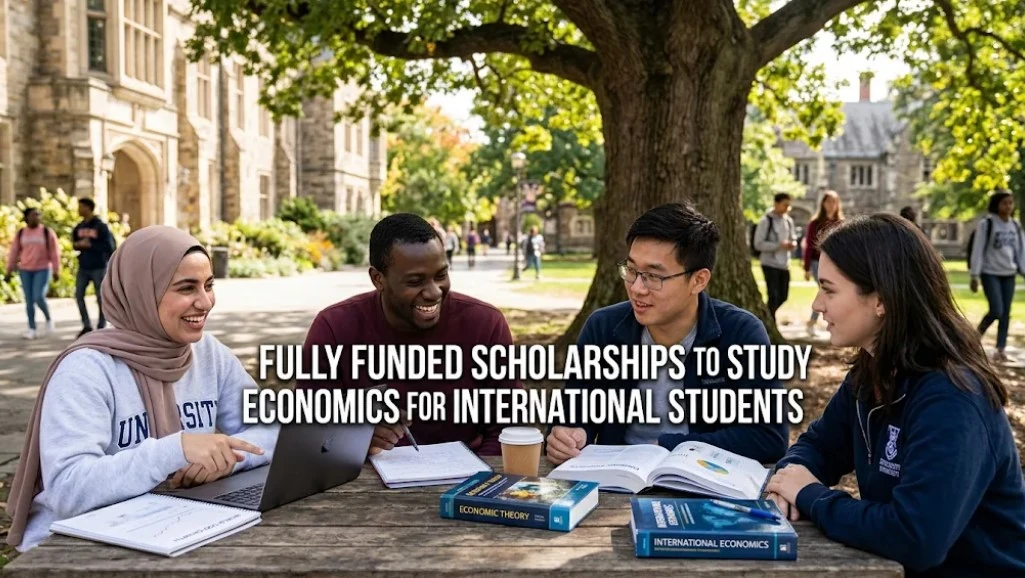
Fully Funded Scholarships to Study Economics for International Students provide an incredible opportunity for ambitious students to pursue internationally recognised degrees without allowing financial difficulties to stand in the way of their academic dreams.
Economics is one of the most valuable academic disciplines in today’s world, offering students the knowledge and analytical skills needed to understand financial systems, international trade, economic development, public policy, business decisions, and global markets.
However, studying economics at a reputable international university can be expensive, particularly for students who must pay international tuition fees, accommodation costs, transportation expenses, and other academic charges.
Fortunately, there are several Fully Funded Scholarships to Study Economics for International Students offered by governments, international organisations, universities, and private foundations.
These scholarships are designed to support talented students who demonstrate strong academic potential, leadership qualities, research interests, and a commitment to making meaningful contributions to society.
Depending on the scholarship, successful applicants may receive full tuition coverage, monthly living allowances, accommodation support, international travel expenses, health insurance, and other educational benefits.
Whether you are interested in pursuing an undergraduate degree, a master’s programme, or a PhD in economics, exploring international scholarship opportunities can help you access quality education and develop a successful career.
Many of these programmes welcome applications from students with different nationalities and academic backgrounds, although individual eligibility requirements apply.
Why Study Economics Abroad?
Economics is a broad and influential discipline that examines how individuals, businesses, governments, and societies make decisions about limited resources.
Studying the subject abroad allows students to explore economic theories, research methods, financial policies, and international economic relationships within diverse academic environments.
An international economics degree can also provide opportunities to learn from experienced researchers, participate in economic research projects, collaborate with students from different backgrounds, and develop professional connections.
Some important reasons to study economics abroad include:
- International career opportunities: Economics graduates can pursue careers in banking, financial institutions, government agencies, international organisations, consulting firms, and research institutions.
- Advanced research opportunities: International universities often provide access to specialised research facilities, economic databases, and experienced academic supervisors.
- Understanding global economic systems: Studying alongside people from different backgrounds helps students understand international trade, economic inequality, development challenges, and financial relationships.
- Professional development: Economics programmes develop analytical thinking, statistical knowledge, problem-solving abilities, and decision-making skills.
- Academic progression: International qualifications can provide a strong foundation for further studies in economics, finance, public policy, development studies, and related disciplines.
Fully Funded Scholarships to Study Economics for International Students
The following scholarship programmes are worth exploring if you want to pursue an economics degree internationally.
Some offer comprehensive funding, while others provide substantial financial support or are fully funded only under particular eligibility and programme conditions. Always check the specific award and university before applying.
-
Erasmus Mundus Joint Masters Scholarship
The Erasmus Mundus Joint Masters Scholarship is one of the most attractive opportunities for international students interested in pursuing postgraduate education in economics and related disciplines.
Supported by the European Union, the programme brings together universities from different countries to deliver internationally recognised joint master’s degrees.
Students can explore participating programmes covering economics, economic policy, international development, financial analysis, public administration, and other related fields.
Successful scholarship recipients can receive funding towards participation costs, travel, visa expenses, and living allowances. The opportunity to study at multiple universities also exposes students to different economic perspectives, academic systems, and research environments.
Eligibility: Applicants generally need a recognised undergraduate qualification or equivalent, satisfy the admission requirements of their chosen programme, and demonstrate the academic ability required for postgraduate study.
Application: Applications are submitted directly to the consortium responsible for the selected Erasmus Mundus programme. Available courses and deadlines vary.
Official website: https://erasmus-plus.ec.europa.eu/opportunities/individuals/students/erasmus-mundus-joint-masters
-
Chevening Scholarship
The Chevening Scholarship is a prestigious international scholarship programme that supports outstanding emerging leaders pursuing eligible one-year master’s degrees.
It is an excellent option for international students interested in economics, economic development, international finance, public policy, and related disciplines.
The scholarship is designed to develop future leaders who can use their international education and professional experiences to contribute positively to their societies.
Chevening generally covers university tuition fees, living expenses, travel to and from the study destination, and other approved allowances. However, some courses have different funding arrangements, so applicants should consult the current scholarship guidelines.
Eligibility: Applicants must meet the nationality requirements, possess the required undergraduate qualification, demonstrate eligible work experience, and satisfy the programme’s leadership and career development criteria.
Application: Candidates must apply for an eligible master’s programme and complete the Chevening scholarship application according to the annual application guidelines.
Official website: https://www.chevening.org/scholarships/
-
Commonwealth Master’s and PhD Scholarships
Commonwealth Scholarships provide valuable educational opportunities for eligible students from Commonwealth countries who want to pursue postgraduate education.
Economics is a relevant academic discipline, particularly when connected to economic development, poverty reduction, financial inclusion, international trade, and sustainable development.
The programme supports talented individuals who have the potential to contribute to development in their home countries through advanced education and professional experience.
Depending on the award, scholarship benefits can include approved tuition fees, living allowances, travel expenses, and other necessary study-related support.
Eligibility: Applicants must satisfy the citizenship and residency conditions of the relevant scholarship category. They generally need an appropriate undergraduate qualification and must demonstrate academic merit and development-related objectives.
Application: Applicants should review the available Commonwealth scholarship categories and follow the application procedure through the appropriate national nominating agency or approved route.
Official website: https://cscuk.fcdo.gov.uk/scholarships/
-
DAAD Scholarships
The German Academic Exchange Service (DAAD) offers various scholarship opportunities for international graduates, researchers, and postgraduate students interested in studying or conducting research internationally.
Economics students can investigate relevant DAAD-funded programmes in development economics, international economics, economic policy, financial systems, and related social sciences.
Depending on the particular funding scheme, recipients may receive monthly stipends, travel allowances, insurance support, and other financial benefits. Some programmes also provide additional assistance for research activities.
One important advantage of DAAD is the variety of funding opportunities available for different academic levels and research interests.
Eligibility: Requirements depend on the selected scholarship. Applicants may need a recognised undergraduate degree, strong academic records, relevant professional experience, and a suitable study or research proposal.
Application: International students should search the DAAD scholarship database and identify programmes that match their intended economics specialisation.
Official website: https://www.daad.de/en/studying-in-germany/scholarships/daad-scholarships/
-
Australia Awards Scholarships
Australia Awards Scholarships are government-funded opportunities designed to support students from eligible developing countries who wish to undertake higher education.
The programme is particularly relevant to students interested in economics as a tool for addressing development challenges, strengthening institutions, improving financial systems, and promoting sustainable economic growth.
Successful recipients generally receive full tuition fees, return air travel, an establishment allowance, living expenses, and approved health insurance. Additional academic support may also be available.
Applicants interested in economics should identify eligible programmes that align with the development priorities of their respective countries.
Eligibility: Applicants must come from an eligible participating country and satisfy the relevant academic, professional, and programme-specific conditions.
Application: Applications are submitted according to the instructions and deadlines established for the applicant’s country.
Official website: https://www.dfat.gov.au/people-to-people/australia-awards/australia-awards-scholarships
-
Swedish Institute Scholarships for Global Professionals
The Swedish Institute Scholarships for Global Professionals offer funding opportunities for qualified international students pursuing eligible master’s programmes.
The programme is designed to develop future professionals and leaders who can contribute to sustainable development, international cooperation, and positive social change.
Students interested in economics may explore eligible master’s degrees related to economic development, public policy, financial management, international business, and sustainable economic systems.
Depending on the applicable scholarship terms, benefits can include full tuition coverage, monthly living allowances, travel grants, and other approved support.
Eligibility: Applicants must satisfy the participating-country requirements, professional experience conditions, leadership criteria, and admission requirements of an eligible master’s programme.
Application: Candidates must first identify an eligible master’s programme and follow the Swedish Institute’s application instructions for the relevant academic year.
Official website: https://si.se/en/apply/scholarships/
-
France Excellence Eiffel Scholarship
The France Excellence Eiffel Scholarship is an international scholarship programme designed to attract outstanding students to eligible master’s and doctoral programmes.
Economics is particularly relevant to this scholarship because the programme includes economics and management among its supported academic fields.
The scholarship provides a monthly allowance and additional services, which may include international transportation, national transportation, insurance, assistance with accommodation searches, and cultural activities.
An important distinction is that the Eiffel programme does not itself pay university tuition fees. Therefore, applicants should investigate additional tuition support before considering it a fully funded option.
Eligibility: Applicants must satisfy the programme’s academic, nationality, age, and degree-level requirements. Candidates cannot submit applications independently; a participating French institution must nominate them.
Application: Students should contact their preferred institution and request information about institutional nomination and the relevant application deadlines.
Official website: https://www.campusfrance.org/en/the-france-excellence-eiffel-scholarship-program
-
Fulbright Foreign Student Program
The Fulbright Foreign Student Program provides international students with opportunities to pursue graduate education, undertake research, and develop academic and professional relationships.
Economics graduates interested in international economic relations, financial policy, development economics, public finance, and economic research may find suitable programmes through the Fulbright scheme.
Scholarship benefits vary according to the participating country and applicable award. Depending on the programme, funding may include tuition, living expenses, travel, health coverage, and other approved educational costs.
Fulbright is particularly attractive to students who want to combine academic achievement with cross-cultural exchange and international collaboration.
Eligibility: Requirements vary by country. Applicants may need a relevant undergraduate degree, strong academic performance, English-language proficiency, and a clear explanation of their educational and professional objectives.
Application: Interested candidates should contact the Fulbright programme or designated educational commission responsible for their country.
Official website: https://foreign.fulbrightonline.org/
-
Gates Cambridge Scholarship
The Gates Cambridge Scholarship is a prestigious postgraduate funding programme established to support outstanding students from outside the United Kingdom who wish to pursue eligible postgraduate degrees at the University of Cambridge.
Economics students interested in advanced economic research, international development, financial systems, public policy, and economic inequality can explore relevant Cambridge postgraduate programmes.
The scholarship provides full-cost funding, including the university’s main fees and a maintenance allowance. Additional discretionary funding may also be available for certain academic and personal needs.
Beyond financial assistance, Gates Cambridge offers an international community of scholars, professional networking opportunities, and opportunities for intellectual development.
Eligibility: Applicants must be citizens of countries outside the United Kingdom and meet the academic admission and scholarship selection requirements.
Application: Candidates must apply for an eligible postgraduate course at Cambridge and complete the relevant Gates Cambridge funding application.
Official website: https://www.gatescambridge.org/
-
Clarendon Scholarship
The Clarendon Scholarship is an outstanding funding opportunity for international students seeking to pursue postgraduate studies at the University of Oxford.
The scholarship is open to academically exceptional applicants across different subject areas, including economics and related disciplines.
Successful full-time scholarship recipients receive full coverage of course fees and a grant towards living expenses.
This makes Clarendon particularly attractive to students who want to pursue demanding master’s or doctoral studies without the financial burden of international tuition fees.
The selection process places considerable emphasis on academic excellence, intellectual ability, and future potential.
Eligibility: Applicants must demonstrate excellent academic performance and satisfy the admission requirements of their selected Oxford postgraduate programme.
Application: Students who submit their graduate applications by the relevant December or January funding deadline are automatically considered. There is no separate Clarendon scholarship application.
Official website: https://www.ox.ac.uk/admissions/graduate/fees-and-funding/funding/clarendon
-
Rhodes Scholarship
The Rhodes Scholarship is one of the most recognised international postgraduate scholarships, supporting outstanding individuals who wish to study at the University of Oxford.
Economics students can explore eligible postgraduate courses that develop their understanding of economic theory, financial systems, public policy, economic development, and international affairs.
The scholarship covers university course fees and provides an annual stipend for living expenses. It also supports approved travel expenses, student visa costs, and other specified allowances.
The Rhodes programme places considerable importance on academic excellence, leadership, character, and a commitment to service.
Eligibility: Requirements depend on the applicant’s country or Rhodes constituency. Candidates must meet the relevant academic, age, citizenship, and other selection conditions.
Application: Interested students should identify their appropriate Rhodes constituency and follow its application process.
Official website: https://www.rhodeshouse.ox.ac.uk/scholarships/
-
Japanese Government MEXT Scholarship
The Japanese Government MEXT Scholarship is an excellent opportunity for international students interested in pursuing undergraduate or postgraduate education through the Japanese government’s scholarship programme.
Economics students may apply through the relevant research-student route, provided their intended research area is accepted by the receiving institution.
The scholarship generally provides tuition exemption, a monthly allowance, and round-trip airfare under the applicable programme conditions.
Students interested in international economics, development economics, monetary policy, international trade, and economic research may find suitable academic opportunities through participating institutions.
Eligibility: Requirements vary according to the scholarship category. Research-student applicants must satisfy the relevant academic qualifications, age conditions, and other requirements.
Application: Candidates can apply through the embassy recommendation route or an eligible university recommendation route, depending on the programme.
Official website: https://www.studyinjapan.go.jp/en/planning/scholarships/mext-scholarships/
-
Mastercard Foundation Scholars Program
The Mastercard Foundation Scholars Program is an important educational initiative supporting talented students who face significant financial and educational barriers.
The programme partners with selected universities and institutions to provide scholarships and comprehensive student support. Its opportunities are particularly relevant to eligible African students interested in postgraduate education, leadership development, and contributing to sustainable economic growth.
Students seeking to study economics should investigate the participating institutions and determine whether their chosen economics programme is eligible.
Depending on the partner institution and scholarship arrangement, support may cover tuition fees, accommodation, academic materials, living expenses, mentoring, leadership development, and travel.
Eligibility: Applicants must satisfy the requirements of the participating institution and demonstrate academic potential, financial need, leadership qualities, and a commitment to contributing positively to their communities.
Application: Applications are submitted directly through participating universities. Each institution determines its eligible courses, application requirements, and deadlines.
Official website: https://mastercardfdn.org/en/what-we-do/our-programs/mastercard-foundation-scholars-program/
General Eligibility Requirements for Economics Scholarships
Although eligibility requirements differ between scholarship providers, most international economics scholarships consider a combination of academic qualifications, professional experience, leadership potential, and future career objectives.
Understanding these requirements before applying can help students identify suitable opportunities and avoid wasting time on scholarships for which they do not qualify.
Some common eligibility requirements include:
Academic qualifications: Applicants must possess the appropriate educational qualifications for their intended degree. Undergraduate scholarships generally require secondary school qualifications, while master’s applicants need a recognised bachelor’s degree.
Academic performance: Many fully funded scholarships are highly competitive and prioritise candidates with strong academic records. Students should demonstrate their ability to succeed in demanding economics courses.
English-language proficiency: International applicants may need to provide recognised English-language test results, depending on the university and scholarship requirements. Some institutions accept alternative evidence of English proficiency.
Relevant academic interests: Applicants should demonstrate a genuine interest in economics and explain how their chosen specialisation relates to their educational and professional goals.
Leadership and community involvement: Certain scholarships consider leadership experience, volunteering, professional achievements, and participation in activities that demonstrate a commitment to social development.
Nationality requirements: Government-funded scholarships frequently restrict eligibility to citizens of particular countries. Applicants should carefully review participating-country lists before beginning their applications.
Professional experience: Some postgraduate scholarships require applicants to have relevant employment experience, particularly programmes designed for emerging professionals and future leaders.
Documents Required When Applying for Economics Scholarships
Preparing the necessary application documents early can significantly improve the scholarship application process. Although requirements vary, international students should generally prepare the following documents:
- Academic transcripts: Official records showing previous academic performance and completed courses.
- Degree certificates: Evidence of previously completed educational qualifications.
- Curriculum vitae: A professionally organised CV highlighting education, employment, research experience, achievements, and relevant skills.
- Statement of purpose: A well-written explanation of why the applicant wants to study economics, their academic interests, and future career plans.
- Recommendation letters: References from lecturers, academic supervisors, employers, or other qualified individuals who can discuss the applicant’s abilities.
- Research proposal: Particularly important for applicants pursuing research-based master’s degrees or PhD programmes.
- English-language test results: Where required by the scholarship provider or university.
- Valid passport: Evidence of identity and nationality for international applications.
- Proof of professional experience: Required by certain leadership-focused and postgraduate scholarship programmes.
- Additional application forms: Some universities and scholarship organisations require supplementary forms or personal statements.
Applicants should ensure that every document is accurate, properly formatted, and submitted before the relevant deadline.
How to Apply for Fully Funded Scholarships to Study Economics for International Students
Finding a suitable scholarship is only the beginning. Students must also prepare carefully, understand the selection process, and submit convincing applications.
The following steps can help international applicants improve their chances of securing an economics scholarship.
-
Identify Your Preferred Economics Specialisation
Economics includes several areas of specialisation, and identifying your preferred field can help you select appropriate universities and scholarship programmes.
Some popular areas include:
- Development economics
- International economics
- Financial economics
- Behavioural economics
- Environmental economics
- Agricultural economics
- Public economics
- Monetary economics
- Econometrics
- Health economics
- Labour economics
- Macroeconomics and microeconomics
For example, students interested in international development may prefer programmes focusing on poverty reduction, economic growth, and financial inclusion. Those interested in financial institutions may consider financial economics or monetary policy.
Having a clear academic direction makes it easier to identify programmes that match your long-term objectives.
-
Research Universities Offering Economics Programmes
After identifying your preferred specialisation, research universities offering relevant undergraduate, master’s, or doctoral programmes.
Consider factors such as programme structure, course content, research opportunities, faculty expertise, academic reputation, and scholarship availability.
It is also important to establish whether the university accepts international students and whether your preferred economics programme qualifies for the scholarship.
-
Check Scholarship Eligibility and Funding Coverage
Never assume that every scholarship described as fully funded covers all educational and living expenses.
Some awards provide complete tuition coverage and living allowances, while others offer tuition discounts, monthly stipends, or partial financial assistance.
Carefully investigate the following:
- Full or partial tuition coverage.
- Monthly living allowances.
- Accommodation support.
- International airfare.
- Health insurance.
- Research and academic allowances.
- Visa and relocation expenses.
Understanding the funding package helps applicants avoid unexpected financial difficulties after receiving admission.
-
Prepare a Strong Statement of Purpose
A statement of purpose is one of the most important components of many postgraduate scholarship applications.
Applicants should explain why they want to study economics, what inspired their academic interests, and how the proposed programme connects with their future ambitions.
A convincing statement should demonstrate genuine interest in the discipline rather than simply focusing on the financial benefits of the scholarship.
Explain the economic challenges or research questions you hope to explore and how advanced education will help you develop the necessary knowledge and skills.
-
Obtain Strong Recommendation Letters
Recommendation letters provide scholarship committees with independent evidence of an applicant’s academic ability, personal qualities, and potential.
Students should approach lecturers, academic supervisors, or professional referees who understand their achievements and can provide detailed recommendations.
It is advisable to request recommendation letters early enough to give referees sufficient time to prepare meaningful documents.
-
Submit Applications Before the Deadline
Scholarship deadlines differ considerably between universities and funding organisations. Some applications open many months before the beginning of the academic year.
Create a personal application calendar containing scholarship opening dates, submission deadlines, university admission deadlines, and interview dates.
Submitting applications early also provides enough time to correct errors and address missing documentation.
-
Prepare for Scholarship Interviews
Some competitive scholarship programmes invite shortlisted candidates to participate in interviews.
Students should be prepared to discuss their academic backgrounds, reasons for choosing economics, leadership experiences, research interests, and future professional objectives.
They may also be asked how their proposed education could contribute to addressing economic challenges in their communities or countries.
Practising clear and thoughtful answers can help applicants approach interviews with greater confidence.
Frequently Asked Questions About Fully Funded Economics Scholarships
Can international students get fully funded scholarships to study economics abroad?
Yes. International students can access fully funded economics scholarships through government programmes, international organisations, universities, and private foundations. Opportunities are available for different academic levels, although eligibility varies according to the scholarship and selected university.
Can I study economics abroad without paying tuition fees?
Yes. Several scholarship programmes cover the full tuition costs of eligible economics degrees. Some also provide monthly living allowances, accommodation support, airfare, and other benefits.
Are there fully funded undergraduate scholarships for international economics students?
Yes. Some government scholarship programmes, including the Japanese Government MEXT Scholarship, provide undergraduate funding. However, applicants must confirm that economics is an eligible field under the relevant scholarship category.
Can I get a fully funded master’s scholarship in economics?
Yes. Several opportunities are available for international master’s students, including Erasmus Mundus, Chevening, Commonwealth, and eligible university-based scholarship programmes.
Are there fully funded PhD scholarships in economics?
Yes. International students can explore postgraduate funding opportunities through DAAD, Gates Cambridge, Clarendon, Rhodes, and other university or government-funded research programmes. The availability of funding depends on the chosen institution, research area, and scholarship conditions.
Do I need work experience to qualify for an economics scholarship?
Not necessarily. Some scholarships prioritise academic achievement and research potential, while others require professional experience. Applicants should examine the specific eligibility requirements before submitting their applications.
Can students with a low GPA apply for economics scholarships?
Yes. Some scholarships consider additional factors such as professional experience, leadership, research activities, personal circumstances, and future potential. Nevertheless, highly competitive academic scholarships often require excellent academic performance.
When should I start applying for economics scholarships?
Ideally, students should begin researching scholarship opportunities between six and twelve months before their intended programme begins. Some scholarships have earlier deadlines, so checking individual application schedules is essential.
Conclusion
Fully Funded Scholarships to Study Economics for International Students offer an excellent opportunity to obtain quality international education, develop valuable professional skills, and prepare for meaningful careers in the global economy.
From government-funded opportunities such as Chevening, Commonwealth, DAAD, Australia Awards, and MEXT to prestigious university scholarships such as Gates Cambridge, Clarendon, and Rhodes, there are several funding programmes worth considering.
However, securing a scholarship requires more than identifying available opportunities. Students must understand eligibility requirements, select suitable economics programmes, prepare convincing personal statements, obtain strong recommendations, and submit complete applications before the relevant deadlines.
The most important step is to begin early and focus on scholarships that genuinely match your academic background, nationality, and career ambitions.
With proper preparation, determination, and a carefully planned application strategy, international students can improve their chances of obtaining financial support and pursuing their dream of studying economics abroad.